AI customer service for small business needs a way out to a human
Corey Berg, Fractional Chief AI Officer
- automation
- sales
A customer texts your business at 7:40 on a Thursday night. Two minutes later they get a reply. Ten minutes after that, they are still typing the same question because the reply did not answer it.
That is the gap a new survey just put numbers on. If you are putting AI in front of your customers, or about to, the numbers are worth reading before you build anything.
What the survey found
Alchemer, a feedback software company, surveyed 2,009 U.S. consumers about AI in their customer experiences. The results are in its press release and on its own report page.
Two findings pull in opposite directions. First, 59% of customers expect quicker responses once they know a company uses AI. Speed is no longer a bonus. It is the assumption.
Second, 44% say AI has made it harder to reach a person when they need one. And 43% would pay more for a product or service that guarantees access to human support.
Optimixed's summary adds that the top complaint was not privacy or accuracy. It was getting stuck after the AI failed to resolve the issue.
One caveat. Alchemer sells feedback software and surveyed consumers broadly, not owners of businesses your size. Read it as a direction, not a forecast for your customer list.
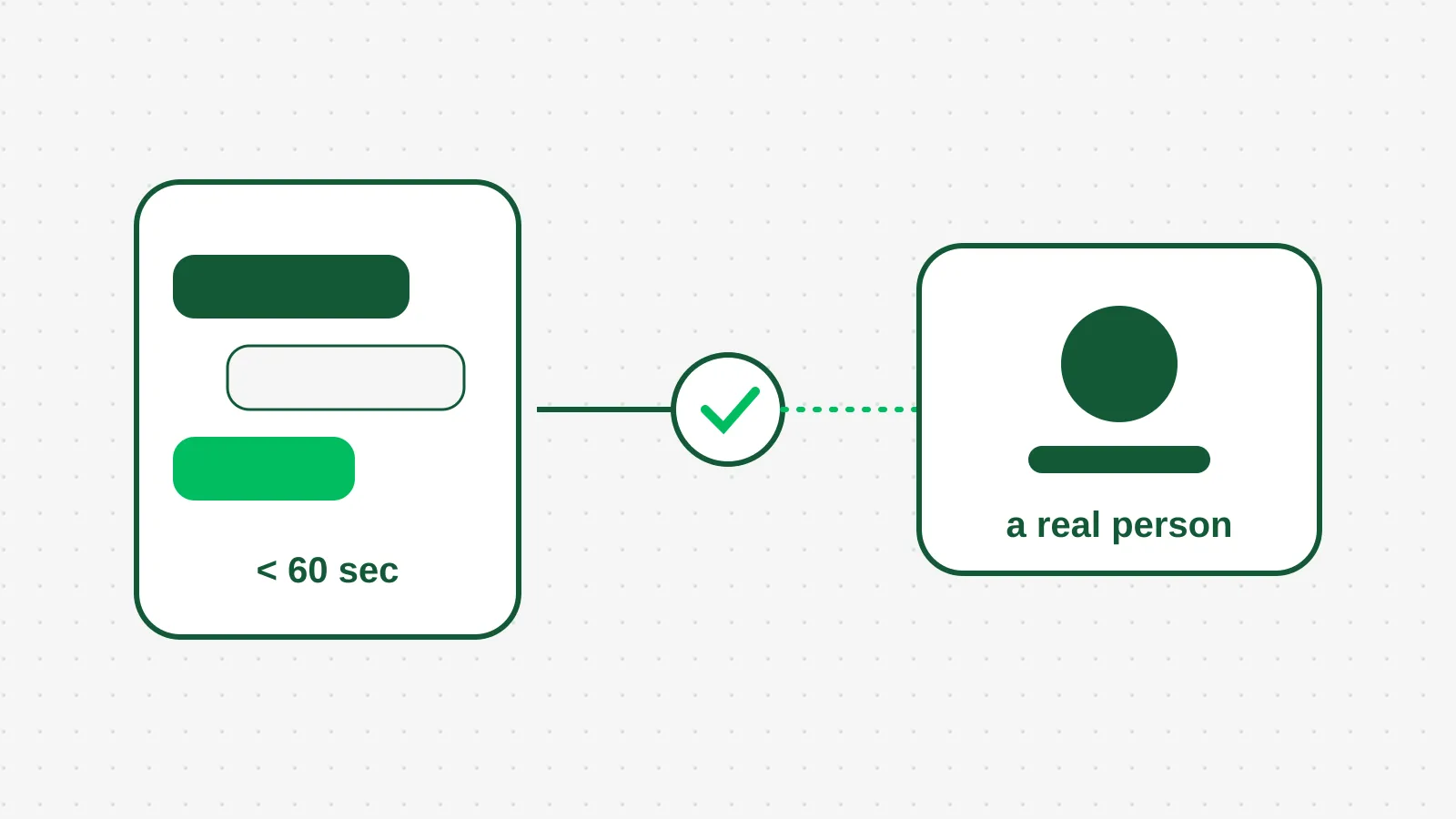 Fast on the first reply, with a visible way to reach a person.
What this means for a founder-led business
At $1M to $10M in revenue, your customers often know your name. That is an asset the big players spent a fortune to fake. An AI reply that traps them away from you spends it.
The survey reads to me as a design brief. The reply should be fast, and it should never be the end of the road.
Three rules I would hold any build to:
- Answer first, in under a minute. Speed is the part AI does better than your team ever will, at 7:40 on a Thursday night or 2 a.m. on a Sunday.
- Say what it is. A reply that admits it is an assistant, and says who will follow up, earns more patience than one pretending to be Sarah in the front office.
- Hand off on a trigger, not on request. If the customer asks the same thing twice, mentions money, a complaint, or a deadline, a person gets the thread and a text alert. Waiting for the customer to say "let me talk to someone" is already a failure.
A fourth habit follows from the first three: tell the customer what happens next. "A person will text you by 9 a.m." is a better closing line than a cheerful emoji. It sets a deadline you can be held to, and it keeps the customer from trying a competitor while they wait.
This is also where I would be skeptical of any vendor demo. Ask to see the worst conversation in their logs, not the best one. How a system fails tells you more than how it performs on the happy path.
The honest math
Say you get 40 inbound texts and calls a month from new leads, and the average first job is worth $2,500. If slow replies cost you even 5 of those leads, that is $12,500 a month walking to a competitor.
Now flip it. If a badly built bot frustrates 3 of those 40 people into leaving, that is $7,500 gone, and you may never see it in a report. The same machine can sit on either side of that ledger. The difference is the handoff design and someone watching the transcripts.
That is also where the real cost is. Software for fast replies is a small line. Writing the rules, testing them against real conversations, and reviewing them monthly is the work that decides which side of the ledger you land on.
What I would do this week
Pull the last 30 days of inbound messages and calls, and count three things:
- How many got a first reply in under 5 minutes.
- How many needed a person to finish the job.
- How many you cannot tell, because nothing was logged.
That last number is usually the loudest. If more than a quarter of your conversations fall in it, fix the logging before you add any AI. You cannot judge a fast reply, or a human exit, that you cannot see.