ChatGPT's business agents are no longer free
Corey Berg, Fractional Chief AI Officer
- automation
- pricing
If you have had a ChatGPT agent quietly updating your CRM or drafting a weekly sales report, the free ride ended this week. On July 6, OpenAI turned on credit-based billing for workspace agents in ChatGPT Business, Enterprise, and Edu plans. I want to walk through what changed, because the way OpenAI priced this is worth understanding before it shows up as a surprise line on your bill.
What a workspace agent actually does
OpenAI launched workspace agents in April 2026 as a way to hand ChatGPT a repeatable job instead of a single question. You connect your tools, describe the workflow once, and the agent runs it on a schedule or a trigger, asking for approval before it sends, posts, or updates anything. OpenAI's own example list includes a lead outreach agent that qualifies inbound leads, drafts a tailored follow up, and updates the CRM. That is close to the exact job I build for clients under the name speed to lead.
The feature launched as a free preview. OpenAI originally set real billing to start May 6, then pushed that date back to July 6, two months later. That grace period is now over. Every workspace agent run inside ChatGPT draws down a credit balance, on top of the seat you already pay for.
How the meter works, and where it stays fuzzy
The rate card prices agent runs in credits based on tokens: input, cached input, and output. OpenAI's own worked example, a run using 20,000 input tokens, 80,000 cached input tokens, and 5,000 output tokens on GPT-5.5, comes out to about 7.25 credits. A typical end-to-end run lands between 5 and 25 credits.
Here is the part I would flag to a client before they turn this on. OpenAI has not published what a credit costs in dollars. You buy a credit pack through your workspace billing settings and watch the balance move. There is no rate card that says "one credit equals this many cents," so you cannot do the back-of-envelope math I would normally insist on before adopting a tool. You find out by using it.
That sits on top of a seat price that already moved once this year. ChatGPT Business runs $25 a seat per month billed monthly, or $20 a seat billed annually. Workspace agents used to be a free bonus on that seat. Now they are a second line with no fixed price tag.
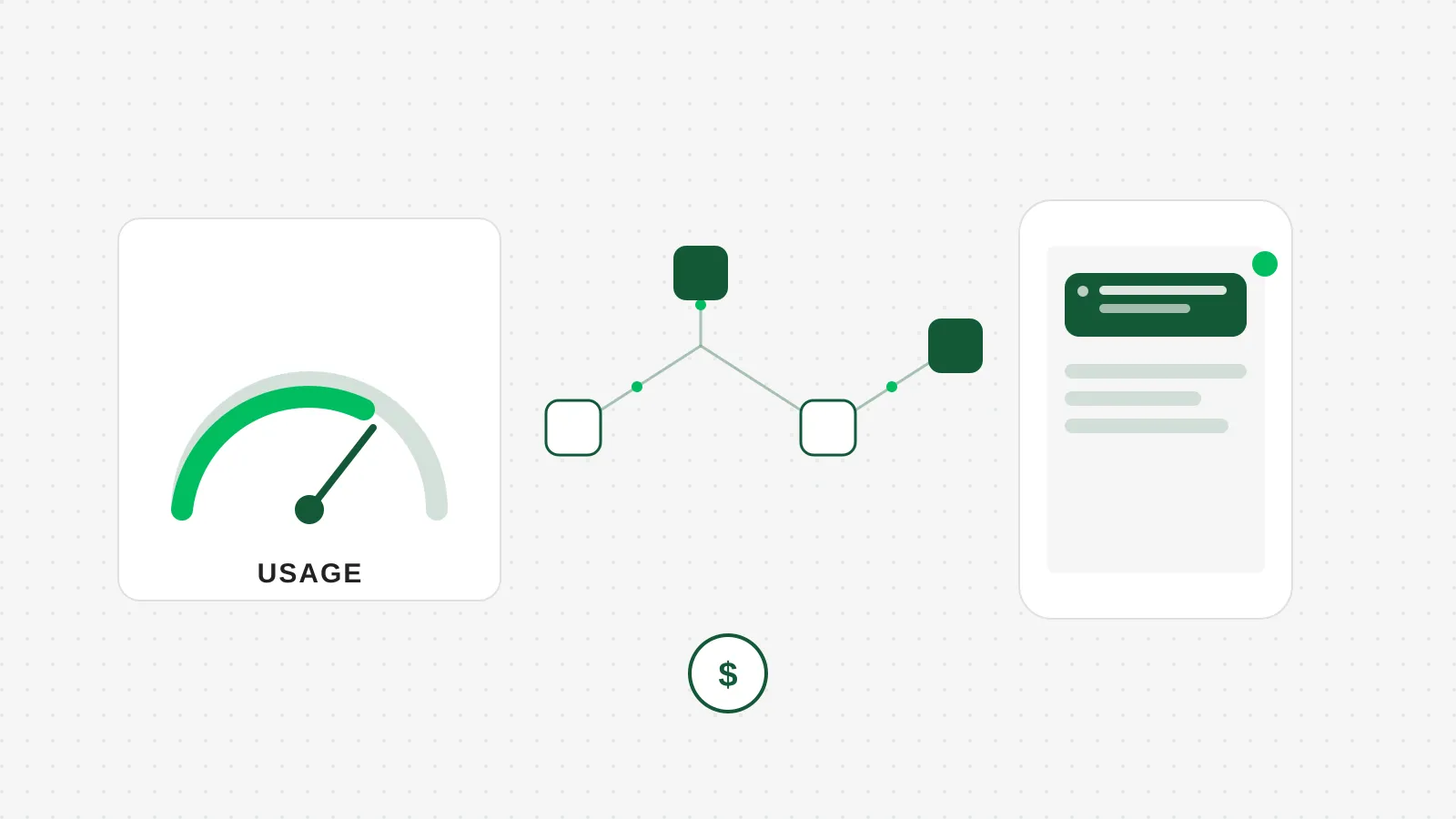 A workspace agent doing real work now moves a needle you cannot see the dollar value of until the bill arrives.
The bill is not the number that matters
Now the reframe, because everything above could read like "AI is getting expensive," and that is the wrong lesson.
Suppose the meter runs hot and agents end up costing you $5,000 a month. If the work they do saves your team $30,000 a month in hours, or closes deals that used to go cold, that is not a cost problem. That is the cheapest capable hire you will ever make, and it never calls in sick.
It helps to separate two kinds of value when you run that math:
- Expense-saving automation gives you back hours you already pay for: invoicing, triage, paperwork. Its ceiling is your payroll.
- Revenue-generating automation makes money you were not making: the lead answered in one minute instead of an hour, the quote that goes out the same day. Its ceiling is your market, which is a much higher ceiling.
And keep the unit cost in perspective. A few dollars of tokens can read every lead that came in this month, draft every follow up, and reconcile a quarter of paperwork. Measured against the work each unit performs, tokens are one of the cheapest inputs your business has ever bought.
The catch: none of that happens just by buying credits. The gap between a $5,000 meter that leaks money and one that returns six times what it costs is the person who sets it up, someone in the right position who understands your business well enough to point those tokens at the work that actually moves it. That is the whole idea behind a fractional Chief AI Officer.
Where this actually matters for a business like yours
If you are running a handful of ChatGPT seats and someone on your team already built a lead outreach agent or a weekly reporting agent inside ChatGPT, it probably still makes sense to keep using it. The convenience of doing it inside a tool your team already has open is real, and switching costs are real too.
But this is exactly the tradeoff I walk clients through before we build anything. A workflow you build inside one vendor's chat app is priced, changed, and metered on that vendor's terms. A workflow I build for a client runs on Make or n8n, calling whichever model does the job best, and the client owns the automation regardless of what OpenAI or Anthropic changes next. When OpenAI moves the free-to-paid line, as it just did with this feature, that only costs you money if your business logic lives inside their product.
What to do this week
If you already have workspace agents running in ChatGPT Business, open your admin billing settings today and look at the credit balance, not just the seat invoice. Set a spend alert if the option exists.
If you are only hearing about this now and thinking about building something similar, the underlying jobs, route a new lead in under a minute, draft the follow up, log it in your CRM, do not require ChatGPT's native agent feature at all. A short Make or n8n workflow does the same job for a fixed, predictable cost, and you are not tied to someone else's credit meter.
Either way, ask the plain question before you scale usage up: what does one run of this agent cost me, in dollars, this month. If nobody in your business can answer that with a number, that is the thing to fix first.