Copilot Business usage-based billing is coming - what to check first
Corey Berg, Fractional Chief AI Officer
- automation
- pricing
You pay per seat for a tool, you know the number, and you put it in the budget. Then the vendor adds a second line to the invoice that moves with usage.
That is what is happening to Microsoft 365 Copilot Business, and the start date just changed.
What changed
Microsoft is making usage-based billing the default for new Copilot Business subscriptions sold through its reseller (CSP) channel. It moved the start from November 2 to December 1, 2026, which gives partners time to test.
The default limit is 4,000 Copilot Credits per user per month. Reseller coverage puts a credit at about one cent, which makes the default ceiling roughly $40 per user per month on top of the seat price. I am working from that coverage, not a Microsoft price sheet, so confirm the rate with your reseller.
Billing also lags. Usage is billed after the month closes, so December usage lands on a January invoice.
Reports also differ on which features count as metered. Some say it covers add-on agent features, not everyday Copilot use. Ask your reseller which one applies to you.
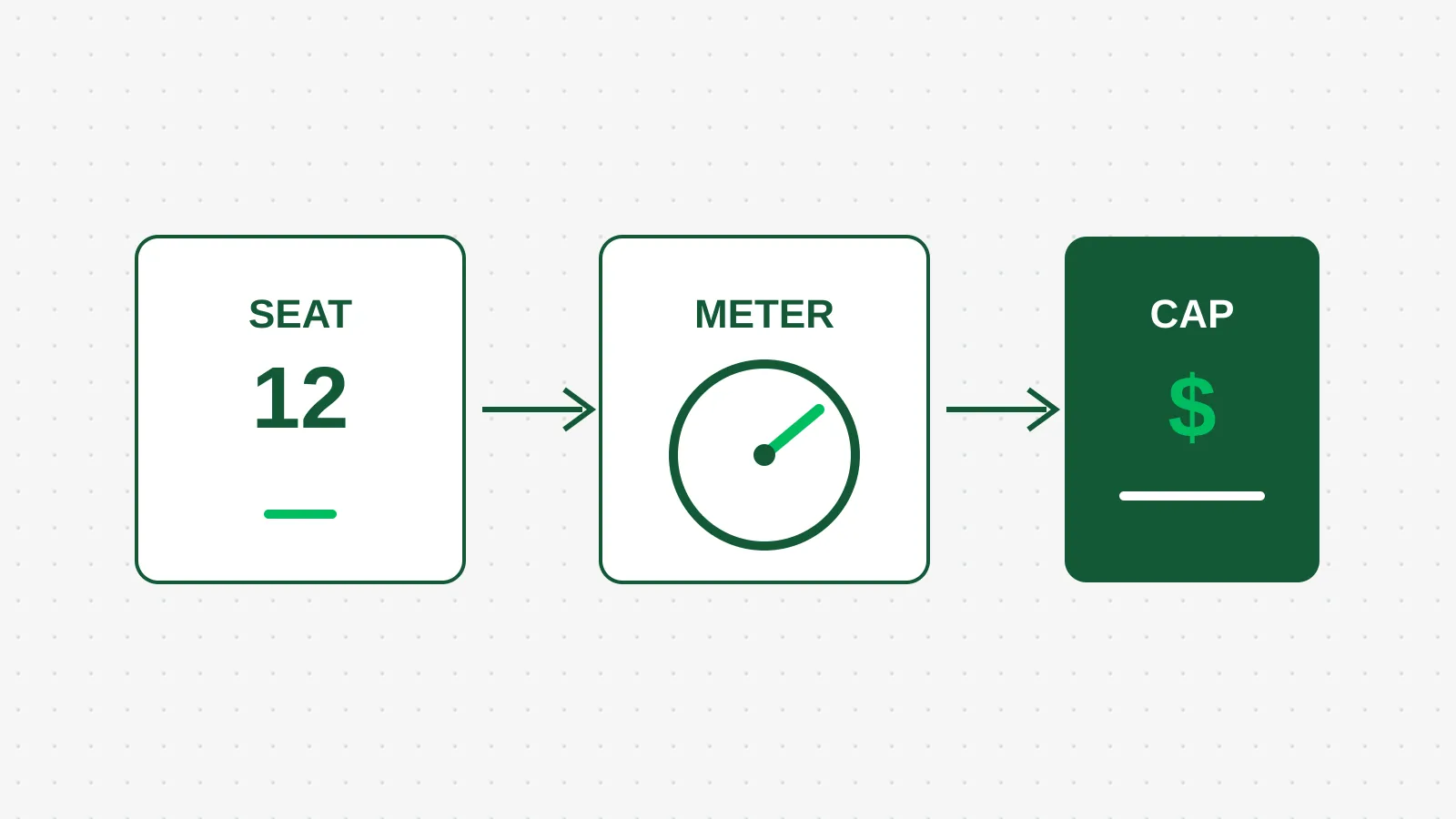
A per-seat price you know, a meter that moves, and a cap you choose.
Why it matters for a founder-led business
A flat seat price is a decision you make once. A metered price is a decision your team makes every day, usually without knowing it.
Say you have 12 people on Copilot Business. If every one of them hit the default limit, that is 12 x $40 = $480 a month of usage charges, about $5,760 a year, before the seat fees. That is a ceiling, not a forecast. Most seats will not get near it.
The number to worry about is not the ceiling. It is the gap between what the meter charges and what the work returns.
A $480 meter that saves a bookkeeper 30 hours a month at $35 an hour returns $1,050. That is a good trade. A $480 meter spent on people asking an assistant to rewrite emails they would have written in two minutes is not.
Why vendors are moving this way
A flat seat price hides the difference between the person who opens the tool once a week and the person who runs it all day. Usage pricing charges for that difference. For the vendor it is fair. For you it turns a fixed line into a variable one, and variable lines need an owner.
This is the same pattern I see across AI tools. The sticker price is the start of the cost, not the whole of it. When I scope a build for a client, I put the metered costs in the proposal next to the hours saved, so the return is visible from day one.
What I would check before December 1
Metered tools reward the businesses that know what each seat is for. Four questions:
- Does this apply to you? The default is reported for new CSP-sold subscriptions. Reports say existing seats are not affected yet. Get that in writing from your reseller.
- Who sets the cap? Partners can adjust the limit. Decide a number per person, based on their role, not the default.
- Who gets the alert? A cap with no alert is a surprise invoice in January. Name one person who sees usage weekly.
- What is each seat supposed to return? Write one sentence per role: "Front desk uses it to draft client replies, target 5 hours a month saved." No sentence, no seat.
Metered billing also makes one thing easy that flat pricing hides: you can see which work earns its cost. A seat that runs 3,000 credits of quote follow-ups is doing something. A seat that runs 40 is a seat you can drop at renewal.
What to do this week
Open your Copilot admin page, or email your reseller, and pull two numbers: how many seats you have and how each is billed. Then write the one-sentence job for each seat.
If you cannot write the sentence for a seat, that is the seat to look at before the first metered invoice arrives in January.