59% of small businesses are carrying invoices 30 days late. Here is a free way to chase them.
Corey Berg, Fractional Chief AI Officer
- automation
- process
You sent the invoice. The work is done. The money is not here, and nobody on your side has time to ask about it politely for the third time.
That is not a you problem. It is getting more common, and the numbers are worth looking at before you decide how much effort the fix deserves.
What the data says
QuickBooks' 2026 Small Business Late Payments Report found that 59% of small businesses have at least some invoices 30 or more days past due. A year earlier that number was 47%.
Businesses waiting on money are owed about $17,700 on average, roughly flat against $17,500 last year. The same coverage notes that more than half of businesses on net-30 terms have overdue invoices, against 26% of those who require payment up front.
So two things are true at once. The share of businesses with late invoices jumped 12 points in a year, and the typical balance did not grow. More of you are waiting, on about the same amount of money.
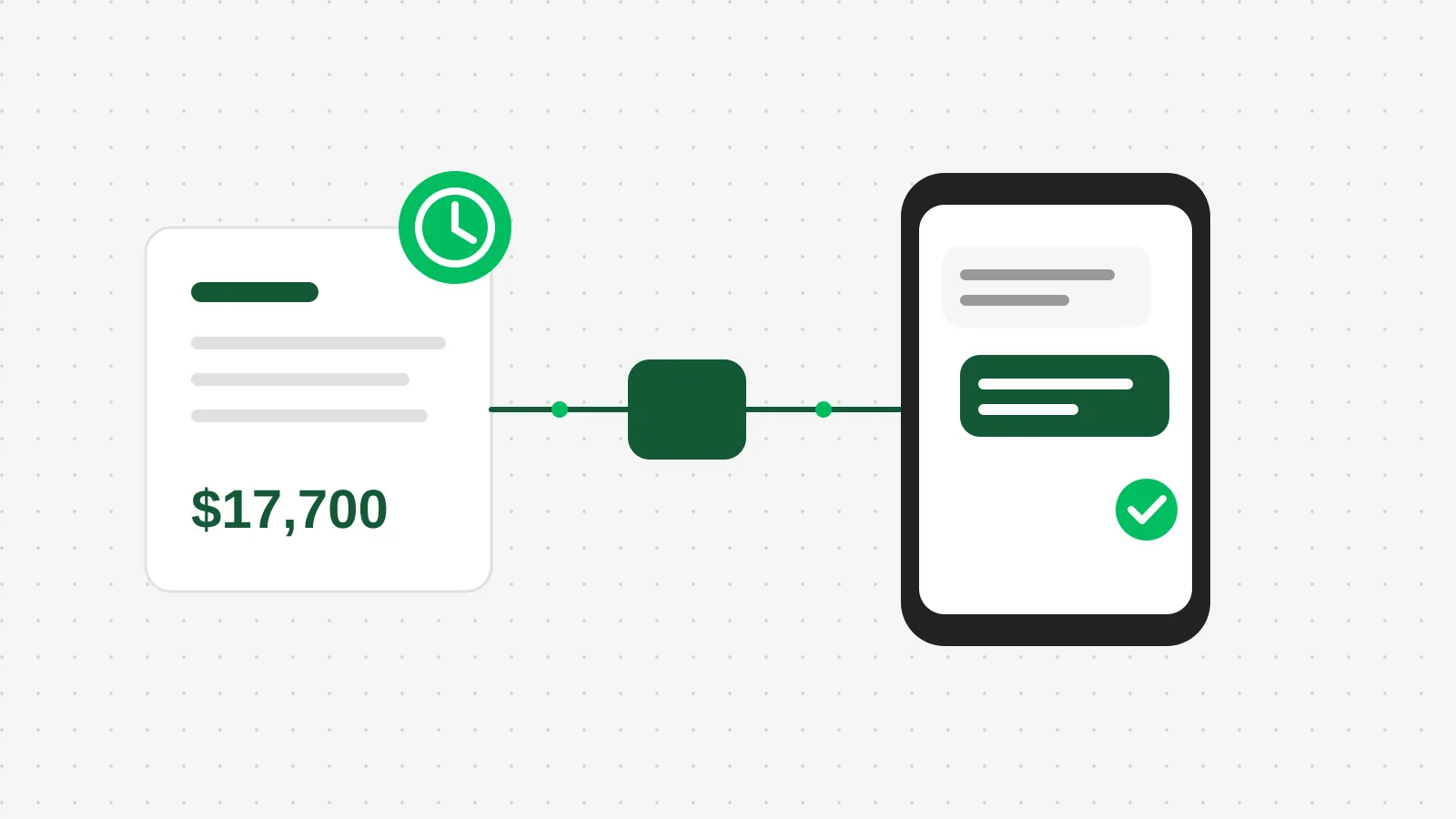 Late invoices rarely need a hard conversation. Most need a prompt reminder that shows up on time.
Why invoices go late in a business your size
Most late invoices are not disputes. Someone forgot, the invoice landed in the wrong inbox, or the person who approves payments is out until Thursday.
What fails on your side is the chasing. You send the invoice, you plan to follow up when it is 7 days late, and then a week of actual work happens. The follow-up goes out at day 19, or it does not go out.
That is a scheduling problem, not an AI problem. A machine that never gets busy is the right tool for it.
The free version I would set up
You need three things: a list of open invoices, a calendar of reminder dates, and a short message for each date. You can run all of it from a spreadsheet and your email.
- Export open invoices. Pull them from QuickBooks, Xero, or wherever you invoice. You need client name, email, invoice number, amount, and due date.
- Add one column: days past due. A single formula, today minus the due date.
- Set four triggers. 3 days before due, the day it is due, 7 days late, and 21 days late.
- Have a chatbot draft the message for each trigger. Paste in the client name, amount, invoice number, and the trigger. Ask for two sentences, polite on the first three, direct on the last.
- Read each draft, then send it yourself. Do not let anything send unattended on day one.
The tone ladder matters more than the wording. The 3-days-before note is a favor: "here is the invoice again, here is how to pay." The 21-day note is a plain statement of the balance and the date you need it by.
What it costs and where it breaks
The cost is a chatbot subscription you probably already pay for and about an hour to set up. If you want it to run without you, a tool like Make or n8n can read the list and queue the drafts for you, and that part costs a monthly plan fee plus an afternoon.
Three things will go wrong, and you should know them now:
- It will remind someone who already paid. Your list is only as current as your last export. That is the reason you read every draft before it goes out.
- It does not know about disputes. If a client told you on the phone that they are waiting on a corrected invoice, the system will still send the day-21 note. Mark those invoices off the list.
- It will not fix a payment terms problem. If most of your clients are on net-30 and half of them are late, shorten the terms or add a deposit. The report's own numbers say immediate-payment businesses are late far less often.
Where this pays for itself is simple arithmetic. If you carry the $17,700 average and the system pulls even one overdue invoice in a month forward by two weeks, that is money in your account two weeks sooner, with no extra hours from you. Count your own average invoice instead of mine.
Where this fits with the rest of your admin
Reminders are the easy half. The harder half is knowing which invoices are at risk before they go late: the client who always pays on day 40, or the one whose last two were disputed. I build that kind of tracking for clients once the simple version is running, but you do not need it to start.
What to do this week
Open your invoicing tool and export every unpaid invoice. Sort by due date. Write down the total owed and how much of it is past due.
Then draft the four reminder messages and send the day-7 and day-21 ones by hand to every invoice already past those marks. That single afternoon will tell you whether the problem is forgetfulness or something worth a harder conversation, and it will probably move some money before the week is over.