How to score your leads without guessing
Corey Berg, Fractional Chief AI Officer
- automation
- sales
You have forty leads sitting in your CRM right now. Some are worth a call today. Some are never going to buy. Most owners do not actually know which is which, so they work the list in the order it came in, or worse, in the order the loudest lead keeps emailing.
Building a real lead scoring model used to take a data analyst and a spreadsheet nobody had time to maintain. A HubSpot update this month changes that math, and the idea behind it works no matter what CRM you run.
HubSpot added a feature called Discover AI rules to its lead scoring tool. Instead of you guessing which behaviors matter, requesting a demo, visiting the pricing page three times, opening the last five emails, the AI reads your own closed won and closed lost history and finds which signals actually predicted a close. It hands you a suggested rule with a confidence level and a point value attached, and you accept it in one click. Source
The feature itself is not the interesting part. What it replaces is: a scoring model somebody built once off a hunch, never revisited, quietly ranking your leads wrong for the last two years.
Gut scoring fails in a specific way. You remember the one lead who visited your pricing page five times and never bought, so you start discounting that signal. You remember the deal that came from a referral and closed fast, so referrals get overweighted forever. A person can only hold a handful of examples in memory at once. An AI model reading your full closed history is not working from a handful, it is working from all of it, and it does not get attached to the last deal it saw.
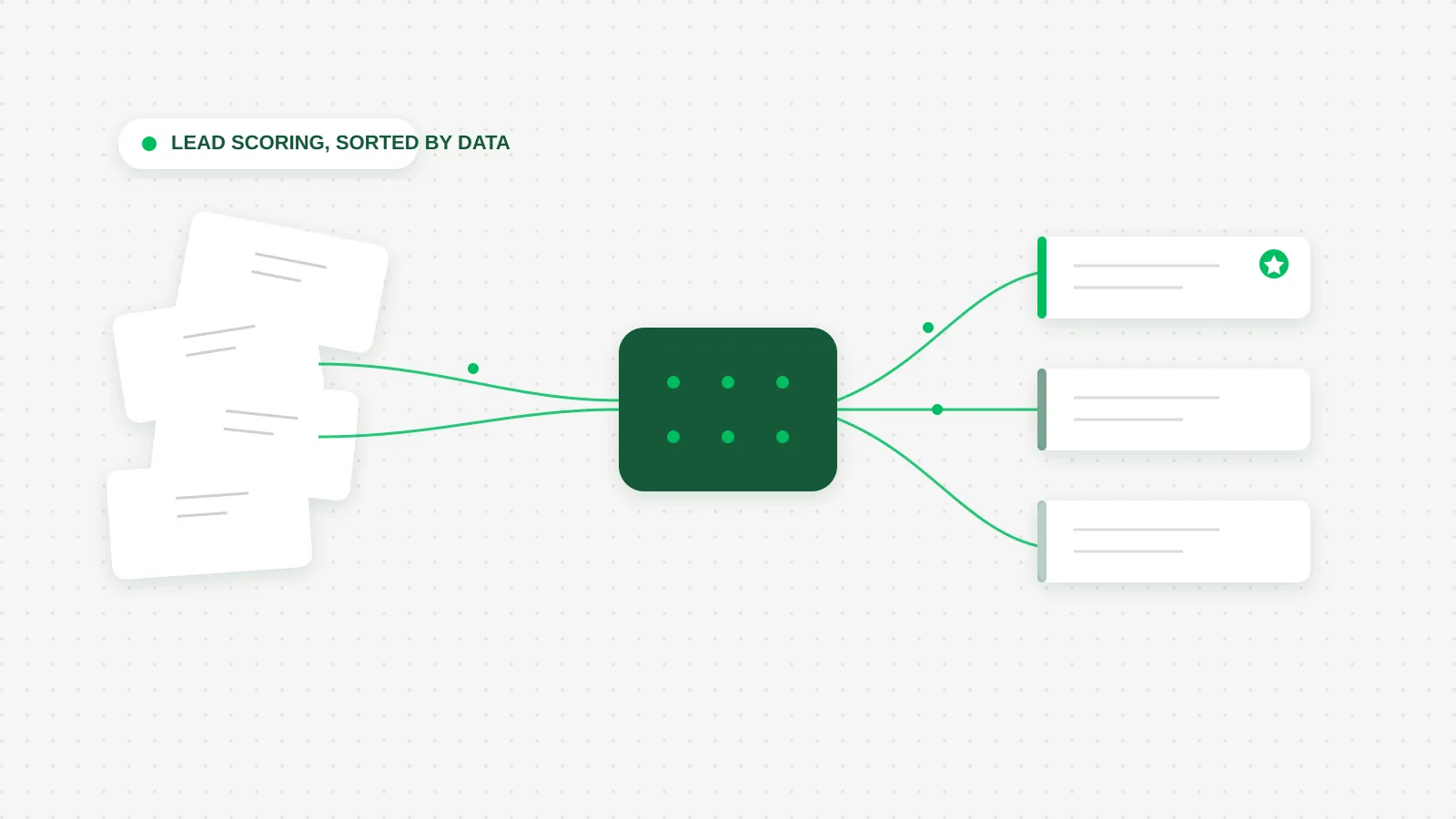 Sorting leads by what actually predicts a close, not by who called last.
You do not need HubSpot to run this play. You need three things: a list of leads that closed, a list that did not, and whatever you already track about each one, source, pages visited, days to first reply, deal size, whatever fields your CRM captures. Export that list.
Hand it to an AI model and ask one question: of everything in this data, what actually separates the leads that closed from the ones that did not. Not what you assume matters. What the numbers say matters. I ran this for a client last month, and the answer surprised him. The strongest signal was not company size or industry. It was whether the lead replied to the second follow up email within four hours. Nobody had that rule written down anywhere before we looked.
Once you know the real signals, the priority list writes itself. High signal leads get a call today. Low signal leads get a slower, automated follow up instead of eating a rep's morning.
You do not need a data team to ask this question well. Export the closed deals to a spreadsheet, keep it to fields you actually track consistently, and be specific in the prompt: ask for the three to five fields most correlated with a close, ask for a plain English explanation of each one, and ask the model to flag anything it is not confident about instead of guessing. That last part matters. A confident wrong answer is worse than no answer, and a model told to say so will.
Here is the honest cost. Pulling twelve months of closed deals out of a CRM and running that analysis through an AI model costs a few dollars in usage, a one time job, not a subscription. Compare that to a sales rep spending even twenty minutes a day deciding who to call first by feel. That is roughly 85 hours a year, 2,100 to 4,300 dollars at a typical loaded rate, spent on a guess instead of an answer.
This is the same instinct behind most of the systems I build for clients: point the AI at the data you already have, not a new tool you have to learn.
This week, export your last 100 closed deals, won and lost, with whatever fields your CRM tracks. Paste that into an AI chat tool and ask it one question: which of these fields actually predicted a close. You will have a real answer by the end of the afternoon, and you did not need to hire anyone or buy anything new to get it.