The AI gap between big companies and yours just got wider
Corey Berg, Fractional Chief AI Officer
- automation
- process
You have probably tried something with an AI tool by now. Drafting emails, summarizing calls, building a report you used to put together by hand on a Sunday night. It helped. It also probably still lives in a browser tab you open when you remember, not a system that quietly runs your business. A global survey published last week put a real number on how common that is, and the part worth your attention is not that small companies are behind. It is that the gap is not shrinking.
What actually changed
McKinsey released its State of AI: Global Survey 2026, asking 1,719 executives across 97 countries how far their organizations have actually gotten with AI agents, not just tried them. Among companies with more than $1 billion in revenue, 40% now say they are scaling AI agents into real production use, up from 27% a year ago. Among smaller organizations, BigDATAwire reported, that figure is 22% and did not move at all from last year.
The same split shows up in a second, unrelated category. Only about 20% of organizations overall are scaling AI coding agents, versus 31% of large enterprises. Two different technologies, the same two speed pattern. Companies with dedicated budget and staff to push a pilot into production are pulling further ahead, and everyone else is standing still, at almost the exact spot they were a year ago.
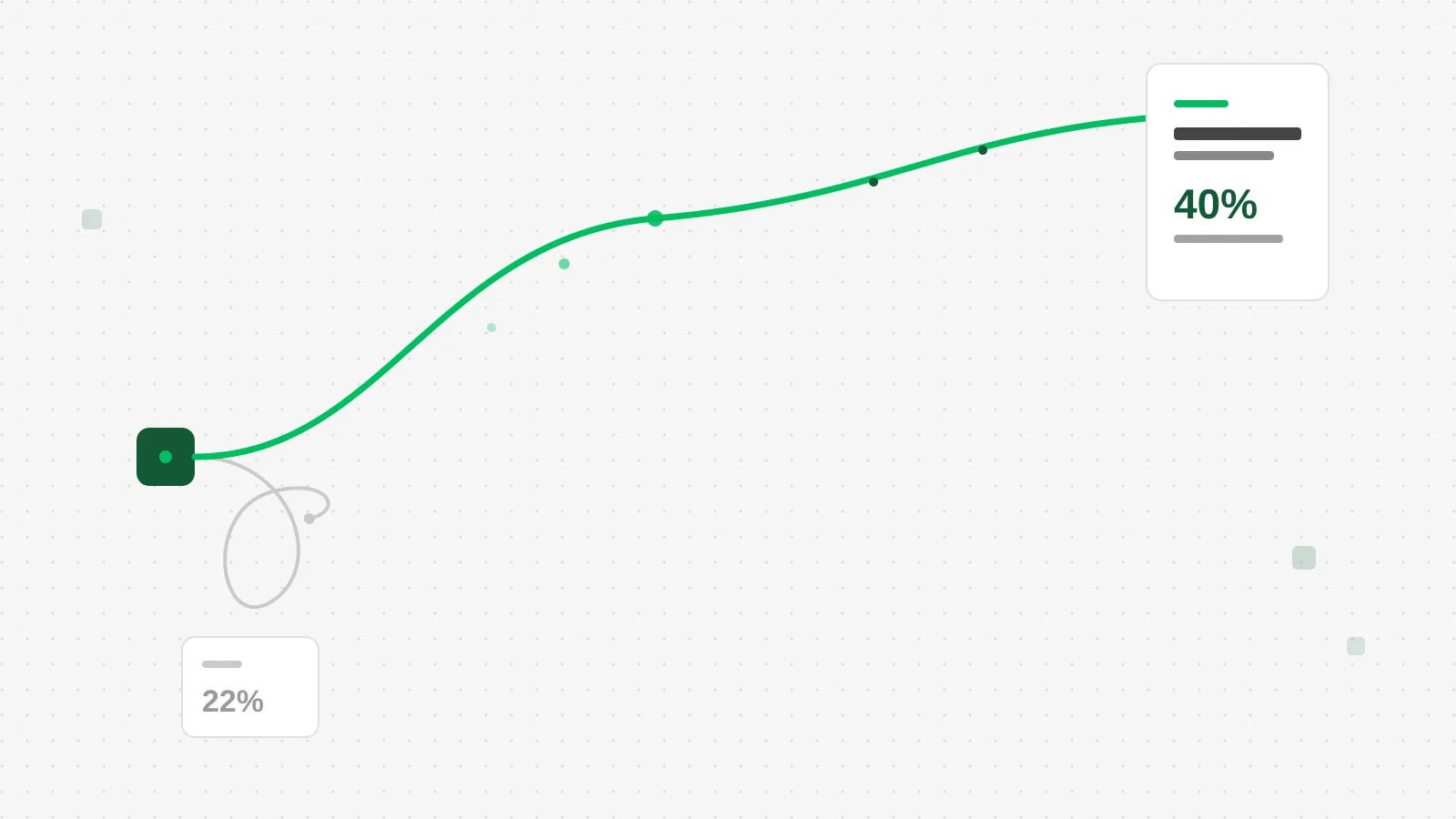 Same starting point a year ago. Only one path actually moved.
How a founder-led business actually uses this
Read that "smaller organizations" bucket carefully. McKinsey's survey skews toward companies much bigger than yours. Plenty of the businesses stuck at 22% have an IT department, a CFO, and a real software budget, and they still could not turn a pilot into a running system in twelve months.
At $1 million to $10 million in revenue, you do not have that department. Whatever AI work is happening in your business right now is happening on the side, in whatever time you or one employee can find between the actual job. That is exactly the setup the flat 22% describes. Spare time does not compound. A dedicated hour a week, spent on one thing until it is actually finished, does.
The fix is not a bigger AI budget. It is picking one workflow and putting a real name next to "who finishes this." Not who tried it. Who owns making it run without anyone having to remember to start it.
The honest math
Say you, the owner, spend three hours a week on the side wrestling with an AI tool that never quite turns into a real workflow. Over a year that is about 150 hours. At what your own time is worth running the business, conservatively $150 an hour, that is more than $22,000 of your own time spent maintaining a pilot that is functionally in the same place it started twelve months ago. That is the cost the flat 22% is hiding.
Compare that to actually finishing one build. A focused block of work, say 15 to 20 hours from someone who does this for a living, to take your highest volume manual task and turn it into something that runs on its own, typically costs a few thousand dollars once. After that it keeps running without eating anyone's Tuesday night.
Neither number is a guess dressed up as fact. They are both real costs. One of them just shows up on a calendar instead of an invoice, which is why it is easy to miss.
What to do this week
- Name the one task in your business that eats the most scattered AI adjacent time right now, the thing someone opens ChatGPT or Claude for on a regular basis without it ever becoming a real workflow.
- Write down who owns finishing it. Not trying it again. Finishing it, meaning it runs without a human remembering to start it.
- Set a real deadline, not "eventually." If nobody on the team can hit that deadline with the time they already have, that is the actual data point. It means the work needs a dedicated hour, not more good intentions.
If that deadline keeps slipping because nobody has three uninterrupted hours a week to give it, that is the point where a fractional Chief AI Officer earns their keep. Not running another pilot, but being the person whose whole job is finishing the one you already have.