How much should an AI automation actually cost you?
Corey Berg, Fractional Chief AI Officer
- automation
- pricing
You ask me what an automation costs to run, not to build, and my honest answer used to be: it depends on the model, and most vendors will not tell you the price in a way you can do real math with. On July 9, one vendor did, and the numbers are worth ten minutes of your time.
What actually changed
OpenAI began rolling out three new versions of its main model, called GPT-5.6, to everyone. It had been a limited preview for a few weeks while the model went through a government review before wider release, but July 9 is the day it opened up.
Instead of naming the three versions by version number, OpenAI named them by the job. Sol is built for the hardest problems, like complex coding and security work. Terra is built for high volume business tasks, customer support, internal tools, document analysis, the kind of work I actually automate for clients. Luna is built for fast, cheap, everyday work: summarizing, drafting, routine steps in a bigger process.
Each tier has a published price per million tokens (a token is roughly three quarters of a word) processed in and generated out. Sol runs $5 in and $30 out. Terra runs $2.50 in and $15 out. Luna runs $1 in and $6 out.
By itself, that is not exciting. What is useful is that OpenAI just handed you a public size chart for what an AI task should cost depending on how hard it actually is. Two days ago I wrote about a different OpenAI pricing change, ChatGPT's workspace agent credits, where OpenAI would not say what a credit costs in real money. This time they did, tier by tier, and you can use these numbers to check any vendor's pricing, not only OpenAI's.
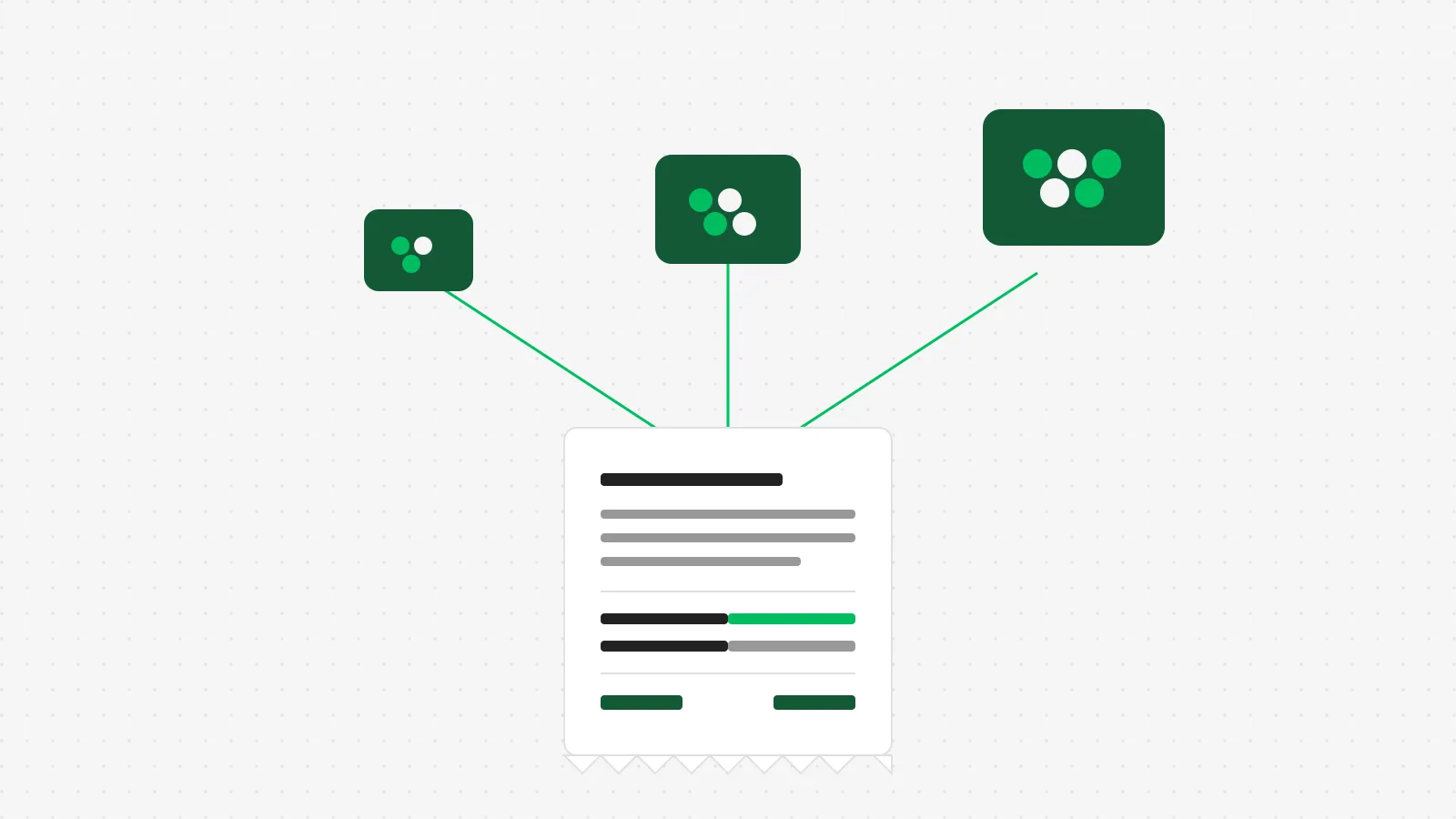 Three tiers, three prices. The math does not change just because the vendor does.
Where this actually matters for a business like yours
Here is the math I would run before building something, using Terra, the tier OpenAI itself points at customer support work.
Say I am building an inbox for a service business doing a few million a year in revenue: the automation reads every incoming customer email, drafts a reply, and flags anything that needs a human to look at it before it goes out. A business that size sees somewhere around 150 of these emails a day. Call it 4,500 a month.
Each email, plus the instructions the automation needs to read it and decide what to do, runs about 600 tokens in. The drafted reply and the flag it writes back runs about 150 tokens out. Over a month that is 2.7 million input tokens and 675,000 output tokens.
At Terra's rate: 2.7 million tokens in costs $6.75 (2.7 times $2.50). 675,000 tokens out costs $10.13 (0.675 times $15). Total: about $17 a month. Run the same job on Sol, the expensive tier, and it comes to about $34 a month. Run it on Luna and it is under $7.
That is the honest, unglamorous truth about most of the automations I build. The model itself is rarely the expensive part. A few dollars a month in API calls is not why a build costs what it costs. The build, the testing, the part where someone makes sure the automation gets it right when a customer writes in a hurry with no punctuation and a typo in their order number, is where the real time and money goes. If anyone quotes you a price for an automation, ask them to separate the two: what runs the model, and what pays for the work of building and maintaining it. A vendor who cannot answer that split has probably not done the math either.
The ratio that answers the title
So how much should an automation cost you? The honest answer is not a dollar figure. It is a ratio.
Suppose the meter ran a thousand times hotter than my example, and a serious set of automations cost you $5,000 a month in tokens. If the work they do saves your team $30,000 a month in hours, or brings in deals that used to slip away, you would sign that bill again every month and feel good about it. The number on the invoice only means something next to the number it produces.
Two kinds of value, and they deserve different ceilings:
- Expense-saving automation buys back hours you already pay for: invoicing, triage, follow up, paperwork. Pay for it like you would pay for those hours, because that is what it replaces. Its ceiling is your payroll.
- Revenue-generating automation makes money that was not coming in: the lead answered in a minute, the quote out the same day, the stale deal revived. Its ceiling is your market, and that ceiling is a lot higher.
Either way, the weight a token can lift is out of all proportion to what it costs. Seventeen dollars a month reads and answers 4,500 customer emails. There has never been a cheaper unit of work.
The trick is not the tokens. It is having the right person in the right position, someone who understands your business well enough to point the machine at the work that actually moves it, and to build it so those tokens get leveraged to their full extent. That is the job description of a fractional Chief AI Officer, in one sentence.
What to do this week
You do not need OpenAI's exact prices to use this. Any AI vendor that publishes a per token rate gives you the same three step math:
- Estimate your real monthly volume. Count the actual emails, leads, tickets, or documents a task like this would touch in a month, not a guess.
- Estimate tokens per item. A rough rule: 750 words in or out is about 1,000 tokens. Add up what goes in, the item plus the instructions, and what comes out, the result.
- Multiply each side by the vendor's price per million tokens and add them together. That is the real monthly cost of running that task.
Run that math before you say yes to a new automation, whoever builds it. And when the pricing or the model changes again, and it will, this is the second time in a week a major AI vendor has moved its pricing, the build should not need a rebuild to follow it. That is why I build client automations to run on whichever model does the job for the price, Sol, Terra, Luna, Claude, or something that does not exist yet, instead of wiring the business logic to one vendor's name.